
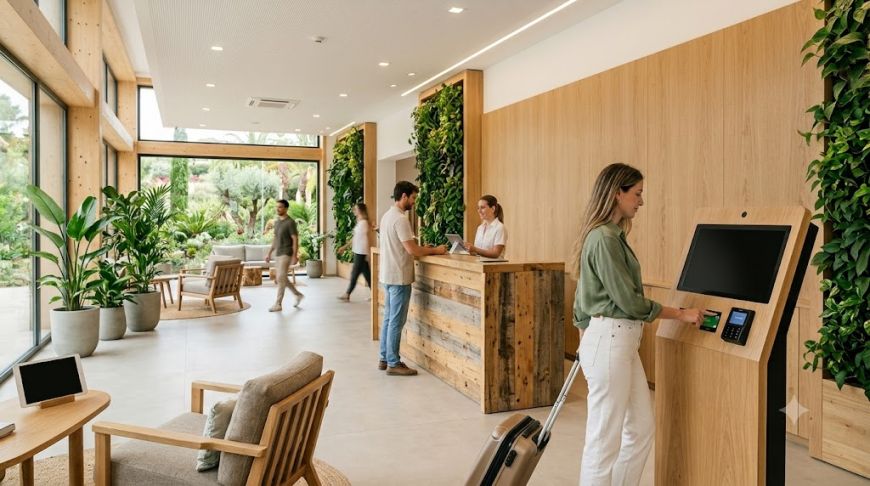
When we think of a sustainable or eco-friendly hotel, most of us picture the same things: refillable soap dispensers, the elimination of single-use plastics, or the classic sign in the bathroom asking guests to reuse their towels.
All these measures are fantastic, but the reality of the sector has changed. These days, the green transition isn’t just about analogue solutions. Being sustainable in the 21st century is also a question of digitalisation and operational efficiency. And that’s where GuestPro comes in.
Hotel technology has shown that caring for the planet and optimising the management and bottom line of a hotel business are not conflicting objectives. On the contrary: every physical process you digitise not only reduces your environmental impact, but also eliminates unnecessary costs, saves staff time and improves brand perception amongst increasingly environmentally conscious travellers. It is important not to overlook digital sustainability.
The paperless hotel: much more than just saving trees
Paper remains one of the biggest black holes in terms of efficiency (and space) in traditional reception areas. Check-in forms, police registration forms, copies of invoices, card payment receipts… Does this endless list sound familiar?
Adopting a ‘zero-paper’ approach thanks to an efficient PMS, such as ours, radically transforms this reality:
- 100% digital check-in: Guests check in using their own device before arrival or sign digitally on a tablet at reception. The data is instantly uploaded to the system without printing a single sheet of paper.
- Cloud-based documentation: Guest records and contracts are automatically and securely archived in digital format, ready for any legal inspection without the need for dusty physical filing cabinets.
- Seamless invoicing: Sending the invoice directly to the customer’s email address at the time of check-out eliminates the cost of paper and printer toner, whilst also speeding up the guest’s departure without unnecessary delays.
Energy efficiency: we connect the PMS with smart home solutions
Energy expenditure on air conditioning, lighting and water consumption represents one of the highest fixed costs for any accommodation and, in turn, one of its largest sources of CO₂ emissions.
Digital sustainability tackles this problem by integrating the PMS with the building’s home automation systems. By connecting both technologies, the hotel operates in a smarter and more sustainable way based on actual occupancy:
- Rooms in ‘eco’ mode: The moment a guest checks out, the PMS communicates the room’s status to the climate control systems to automatically switch off or adjust the air conditioning or heating.
- Pre-arrival activation: Rather than leaving the climate control running all day whilst waiting for the guest, the system can be programmed to switch on remotely just a few hours before the expected arrival time recorded in the PMS.
- Common area control: Optimisation of lighting and temperature in meeting rooms or common areas according to the day’s booking schedule.
Remote cloud-based management reducing the need for on-site visits
Traditional software installed locally on physical servers within the hotel itself required the constant presence of technicians for updates, IT maintenance or troubleshooting. Furthermore, it forced managers or owners to travel to the premises in person to review metrics or carry out end-of-day closing procedures.
Migrating to a cloud-based PMS eliminates this burden:
- No on-premises servers: Removing physical servers from the hotel basement reduces the constant electricity consumption of this equipment and the cooling systems required to prevent overheating.
- Access from anywhere: Management and the administrative team can manage rates, check occupancy figures or audit reports from anywhere in the world, reducing unnecessary daily travel.
- Invisible maintenance: Software updates are carried out remotely and globally by the technology partner – that is, us – eliminating the carbon footprint associated with on-site technical visits.
In short, the future of the sector is green and digital
Sustainability is no longer just a marketing ploy to secure a green label on the façade; it is an essential operational strategy for optimising resources in an increasingly competitive market.
Reducing a hotel’s carbon footprint does not require sacrificing guest comfort or staff productivity. On the contrary, the right software automates the most labour-intensive processes, drastically reduces operating costs and enables the delivery of a modern, seamless and responsible experience.
